



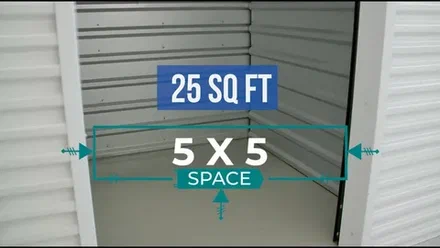
Choosing a storage unit size is one of those things that seems straightforward until you’re actually standing in the facility trying to estimate whether your stuff will fit. Going too small means cramming everything in and not being able to access anything without a major excavation, while going too large means paying for space you’re not using. For a lot of people, renting a mid-range unit like practical 10×5 storage units turns out to be exactly the right balance, offering enough room to store a meaningful amount without the cost of a larger space you don’t really need.
A 10×5 unit gives you fifty square feet of floor space, which is enough to comfortably hold the contents of a small bedroom, a collection of large furniture pieces like a sofa and a few dressers, or a mix of boxes, sporting equipment, and seasonal items that have been taking over your garage or closets. It’s a versatile size that works well for people who are in between moves, doing a home renovation, or just dealing with the kind of gradual accumulation that sneaks up on everyone over time. Apartment Therapy’s helpful guide on what to toss before you move is worth a read before you start packing, since it helps you think critically about what actually deserves storage space versus what might be easier to let go of entirely.
Before you book any size unit, do a quick walkthrough of everything you plan to store and write it down. Even a rough list helps you visualize the volume of what you’re working with, and you’ll often be surprised by how much or how little it actually is once it’s on paper. If you’re storing any large furniture, measure the pieces beforehand so you know they’ll fit through the unit door and that you’ll have room to maneuver once everything’s inside.
How you load the unit matters just as much as the size you choose. Heavy items and furniture should go in first, against the back wall, with lighter boxes stacked on top and toward the front. Items you’ll need to access more frequently belong near the door so you’re not rearranging the whole unit every time you visit. Clear plastic bins are easier to identify than cardboard boxes, and labeling everything on the side rather than the top means you can read labels even when bins are stacked.
If you’re storing anything that doesn’t do well in heat or fluctuating humidity, a climate-controlled unit is worth the extra cost, especially if you’re in a climate with extreme summers or cold winters. Electronics, musical instruments, leather, wood furniture, and important documents are all susceptible to damage from temperature swings, and a few extra dollars a month is a much smaller cost than replacing or repairing those items later.
Family Handyman’s comprehensive guide to home storage solutions that actually work is a great companion resource for thinking about how storage outside the home can complement the organization systems you have inside it. The right unit, used the right way, genuinely makes your daily life easier and gives you back the space and mental clarity that comes with a less cluttered home.