



Every city needs places built to hold a crowd. From concerts and conventions to community festivals and sporting events, large gatherings require spaces designed with capacity, accessibility, and comfort in mind.
These venues come in many forms, each suited to different kinds of events and audiences. This article walks through some of the most common venues found in cities today and explains what makes each one distinct.
Convention Centers
Convention centers are among the largest indoor spaces available in most cities. They are typically designed with flexible floor plans that can be reconfigured for different types of events.
Many include multiple halls that can operate independently or be combined into one large space depending on the occasion. Because of their size and flexibility, convention centers are often used for events that draw attendees from outside the local area.
Community Centers
Community centers serve a different purpose than large commercial venues. These spaces are usually smaller. They are built to support neighborhood activities, classes, and local gatherings, often through multipurpose rooms, gymnasiums, and kitchens available for public use.
Community centers tend to be more accessible in terms of scheduling and are often run by local government or nonprofit organizations.
Outdoor Amphitheaters
Outdoor amphitheaters offer a different atmosphere than enclosed venues. These spaces are typically built into natural or landscaped terrain, with seating that slopes toward a central stage or performance area.
They are popular for concerts and outdoor theater performances. Weather plays a significant role in how these venues are used, so many include covered seating sections or nearby indoor alternatives for less favorable conditions.
Banquet Halls
Banquet halls are designed with a more formal atmosphere in mind. These spaces are common choices for weddings and corporate dinners. Most banquet halls include built-in kitchen facilities, adjustable lighting, and space for seated dining alongside a dance floor or presentation area.
Ceilings tend to be higher than average, which allows for elaborate lighting fixtures and decor to be added without feeling cramped.
Multi-Use Entertainment Facilities and Arenas
Multi-use entertainment facilities and arenas, such as H-E-B Center at Cedar Park, are built to accommodate a wide range of events in a single location.
A single arena might host a sporting event one week, and a concert or trade show the next. This flexibility comes from retractable seating and movable staging that can switch between different configurations. These facilities are designed for large audiences. That means extensive parking and food and beverage areas spread throughout the building.
Fairgrounds
Fairgrounds occupy an unusual place among city venues because they combine indoor and outdoor space. These grounds often include large open fields alongside enclosed exhibition halls, making them suitable for agricultural fairs and seasonal markets. Many fairgrounds also feature permanent structures like grandstands or livestock barns that reflect their original purpose.
Despite this history, fairgrounds today are frequently rented out for concerts and other large public events.
Hotel Ballrooms and Event Spaces
Hotel ballrooms provide another option for hosting large gatherings, particularly those tied to travel or overnight stays. These spaces are often located within larger hotel complexes, giving guests convenient access to lodging, dining, and event space in one location.
Ballrooms can typically be divided into smaller sections using retractable walls, allowing multiple events to take place simultaneously. This setup is especially useful for conferences that include both large general sessions and smaller breakout meetings.
Sports Stadiums
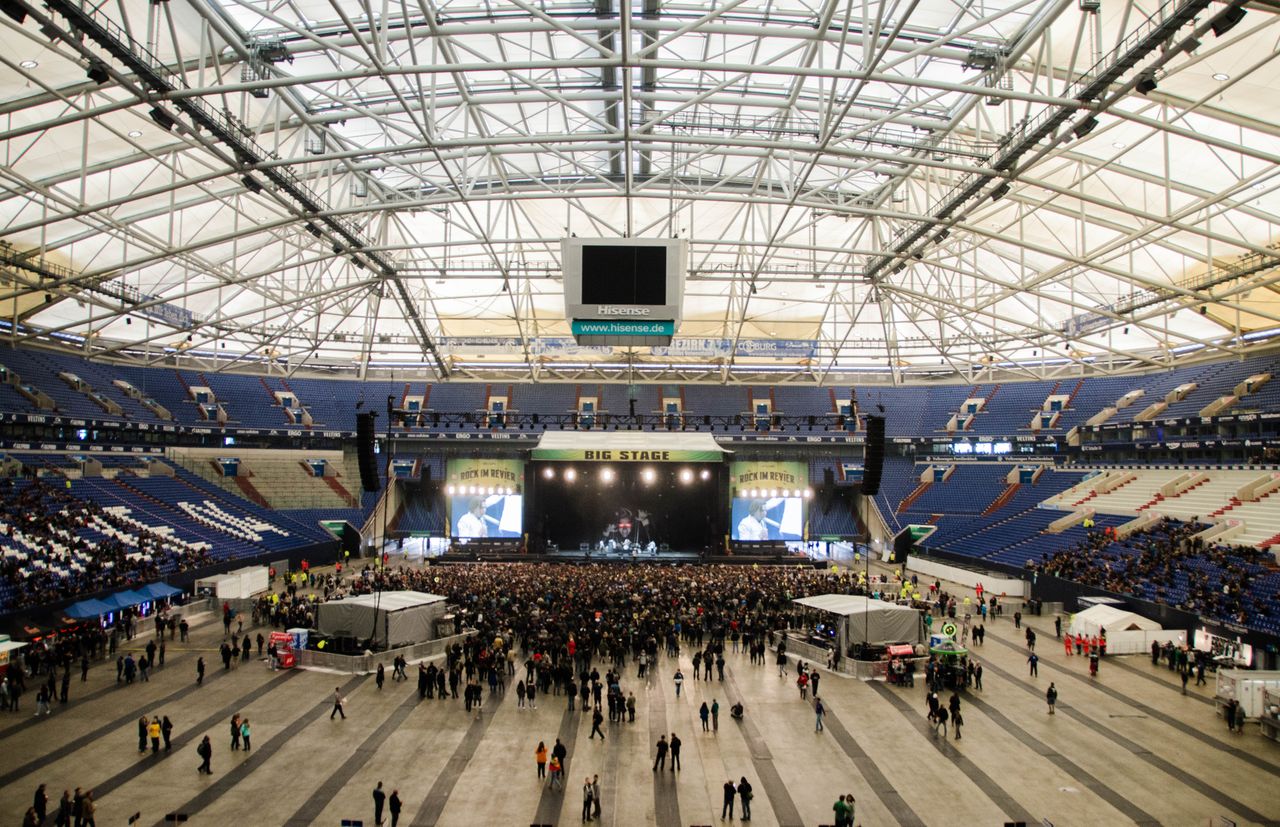
Sports stadiums are built primarily around a playing field or court, with seating arranged to give spectators clear sightlines from nearly every angle.
Unlike arenas, most stadiums are designed for a single sport rather than a rotating lineup of event types. Some stadiums include retractable roofs or convertible seating sections that allow them to host concerts or other large events during the off-season. Because these venues are built for large crowds, they typically include multiple concourses, wide walkways, and dedicated areas for concessions.
Performing Arts Centers
Performing arts centers are designed with acoustics and sightlines as the top priority. These venues typically house one or more theaters, each built to support live music, dance, or theatrical productions.
Stage design in these spaces tends to be more elaborate than in general-purpose venues, with fixed rigging systems and specialized lighting grids built into the architecture. Many performing arts centers also include smaller studio spaces used for rehearsals or more intimate performances.
Rooftop and Garden Venues
Rooftop and garden venues offer an alternative to traditional indoor or amphitheater style spaces.
These locations are often found on top of hotels, office buildings, or standalone event properties, and they tend to appeal to guests looking for open air settings with a view. Garden venues serve a similar purpose at ground level, using landscaped grounds instead of elevation to create atmosphere.
Both types of spaces are typically more exposed to weather conditions, so many include tents or covered structures that can be added as needed.
Cities rely on a wide variety of venues to bring people together, and each type serves its own purpose. From the flexibility of multi-use arenas to the intimacy of community centers, these spaces reflect the different needs of the events they host. Location, accessibility, and seasonal timing all play a role in determining which venue works best for a particular gathering.
Taking the time to understand these differences can make it easier to appreciate the planning that goes into every large event a city hosts.