



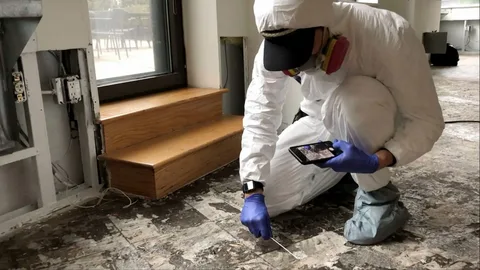
Mold air quality testing is a scientific process used to measure the concentration and types of mold spores suspended in indoor air. Because mold spores are microscopic—ranging from 1 to 100 microns in diameter—rooms can appear clean while still harboring thousands of airborne spores per cubic meter. Testing provides objective data to determine whether indoor air is safe to breathe and whether hidden mold growth may be present behind walls, under flooring, or inside HVAC systems.
Professional testing involves drawing a calibrated volume of indoor air through specialized collection equipment. The captured sample is sent to an accredited laboratory for microscopic or molecular analysis, where the lab identifies mold species and counts spores. These results are then compared to an outdoor “control” sample taken at the same time. Elevated indoor levels or the presence of species not detected outdoors indicate an active indoor source of contamination that requires remediation moldactionplan.com.
Mold testing is especially important when occupants experience unexplained respiratory symptoms, smell persistent musty odors, or suspect water damage but see no visible mold. In such cases, testing helps pinpoint hidden growth areas and guides proper cleanup measures moldinspect.org.
While do-it-yourself kits can detect mold presence, professional air sampling provides far more detailed and reliable results. Ultimately, mold air quality testing is not just about identifying spores—it’s about safeguarding indoor environments, protecting property value, and ensuring the health of everyone who lives or works inside.