



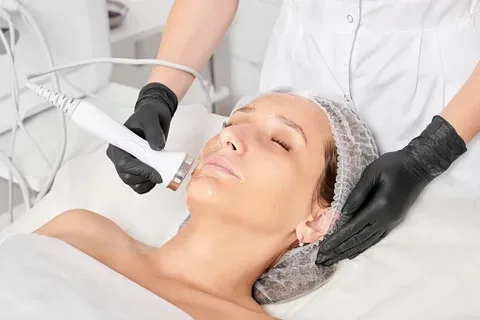
Non-surgical skin tightening has become one of the fastest growing areas in aesthetic medicine. Many people want visible lifting and firming results without undergoing surgery or dealing with long recovery periods. As a result, advanced technologies such as High-Intensity Focused Ultrasound (HIFU) have become increasingly popular for facial rejuvenation and skin tightening treatments.
HIFU works by delivering focused ultrasound energy deep into the skin’s foundational layers. Unlike many surface-level treatments, this energy penetrates beneath the skin to stimulate the body’s natural collagen production. Collagen is the structural protein responsible for maintaining firm, youthful skin. As we age, collagen production slows down, leading to sagging, fine lines, and reduced skin elasticity. HIFU treatments help trigger the body’s natural repair process, encouraging new collagen formation and gradual skin tightening over time.
One of the key advantages of HIFU is that it targets the same foundational layer that cosmetic surgeons address during surgical facelifts, but without incisions or downtime. The treatment is commonly used to improve the appearance of sagging around the jawline, cheeks, neck, and brow area. Some patients also use HIFU to tighten loose skin on areas such as the décolletage or lower face where signs of ageing can become more noticeable.
During the procedure, a specialised device delivers controlled ultrasound energy into precise depths of the skin. Patients may feel a mild warming or tingling sensation as the energy is delivered, but the treatment is generally well tolerated and does not require recovery time. Because HIFU stimulates the skin’s natural regenerative processes, results appear gradually over several weeks as collagen production increases.
According to guidance published by Harvard Medical School in discussions about non-surgical skin tightening treatments, technologies that stimulate collagen regeneration can help improve skin firmness and texture without the risks associated with surgery. These types of treatments have become increasingly common as patients seek natural-looking improvements rather than dramatic surgical changes.
For those considering professional HIFU treatment options, clinics offering medical-grade devices can tailor the procedure based on the individual’s skin condition and treatment goals. A consultation typically involves assessing skin laxity, facial structure, and areas of concern before designing a personalised treatment plan.
Most patients see gradual lifting and tightening over two to three months as the skin continues to produce new collagen. Because the treatment stimulates the body’s natural processes, results tend to look subtle and natural rather than artificial. Many people choose to repeat treatments annually to maintain their results.
Ultimately, HIFU represents a modern approach to skin rejuvenation, providing a non-invasive alternative for individuals seeking firmer, more youthful-looking skin without surgery or extended recovery time.